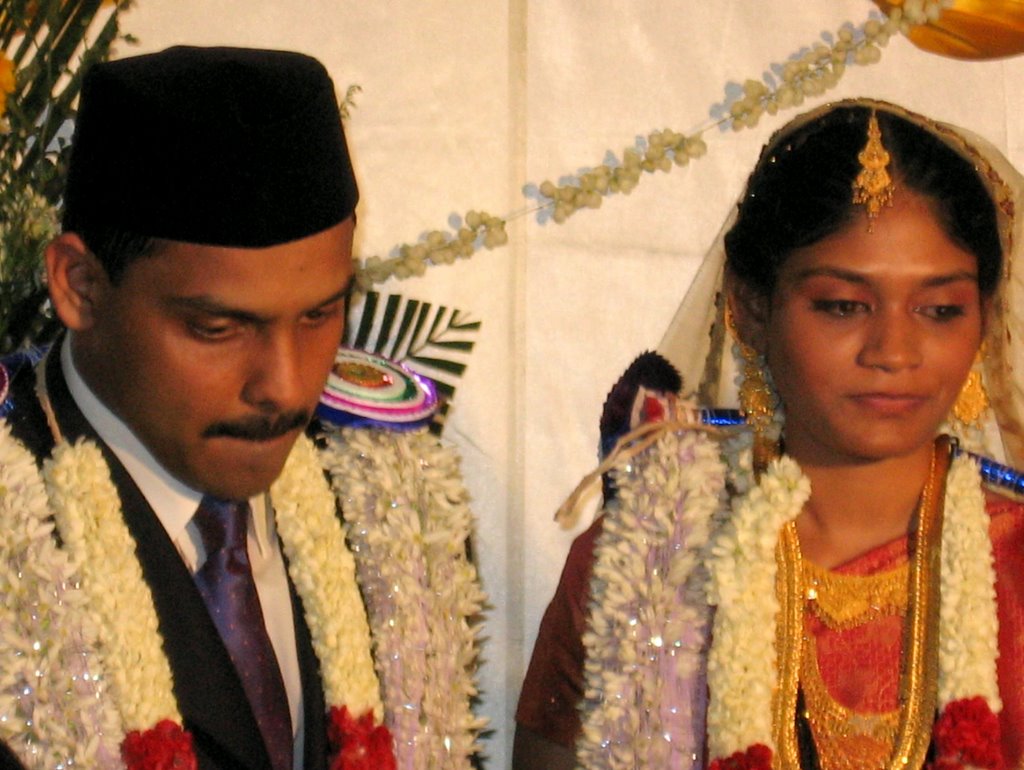
This got started when i was watching the movie 'Kalaba Kadhala'. The guy gifts his wife an 'Oonjal' (Swing) for her b'day. In the whole movie one thing I liked was this ' Oonjal' . It was a cute small one but attractive. I got reminded of the oonjals we have at our ancestrol home in Palghat, then slowly thoughts drifted to the oonjal ceremony in all Tambram marriages. Now that many of my friends are getting married, thought why not take some time to see wat all rituals we have and wat they signify. Googled for my some time , thot will share wid all ..
The following is extracted from few sources on the net(www.mypandit.com,www.creativeweddingcards.com/Rites/), expert comments from maami's and is a mix of all i cud relate.. Tamil Wedding is a two day event hence this blog is a bit loong ;)
The steps of a Vedic wedding and their significance :
Panda Kaal Muhurtham It is customary to invoke the blessings of the family deity to ensure that the wedding preparations proceed smoothly. Usually, this small ritual is performed one day before the wedding. The pole is adorned with turmeric powder, mango leaves and 'kolam'. The 'pujari' performs a 'puja' by sprinkling turmeric, 'kumkum' powder, yellow rice and flowers amidst the chanting of Vedic mantras. The pole is then fixed very firmly into the ground and an 'arathi' is performed. Prayers are offered so that the 'pandaal' should remain strong and firm throughout the ceremonies.The family of the bride and the groom pray to the deity who is symbolically represented by a bamboo pole.
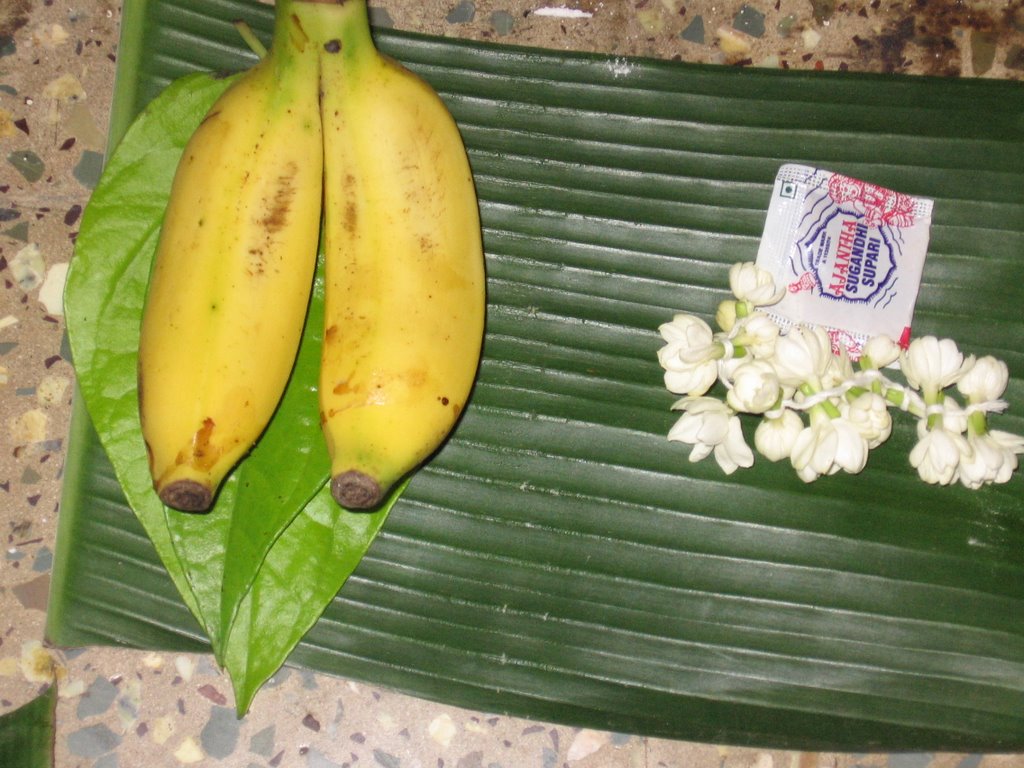
Receiving the Groom When the groom and his family arrive at the wedding hall on the morning one day before the wedding, they are welcomed with a tray containing offerings of flowers, paan supari, fruits and mishri. Rose water is sprinkled on the groom. The bride's brother applies a tilak (dot or line) of sandalwood paste and kumkum on his forehead and garlands him. The bride's mother offers the groom's parents offer a sweet dish prepared from condensed milk. A senior female member of the bride's family performs aarti (a small ritual conducted as a mark of reverence) and welcomes them. It is also customary to break a coconut to the ground as this is believed to help ward off evil spirits.
Vratham This ritual is somewhat similar to the Panda Kaal Muhurtham. It is usually performed a day before the wedding by the family of the bride as well as that of the groom. They recite Vedic hymns in the presence of a priest (Vaadyar) and seek the blessings of a family deity. Next, they invoke the blessings of all their ancestors and pray for their intervention in removing those obstacles that threaten to disrupt the wedding proceedings. Following these ceremonies, all married women from the groom's family participate in a ceremony called Palikai thellichal.
Pallikai Thellichal The family of the bride begins this ceremony a day before the wedding. Clay pots are filled with grains. Married women from both the sides sprinkle water on the pots filled with nine varieties of grain. During this ceremony, the others present sing traditional songs to the accompaniment of music. The next day (the day after the wedding) when the grains sprout, these pots are immersed in a pond so that the fish in the pond may feed on the grains and bless the newly-weds abundantly.
Naandi This ceremony involves honouring a few Brahmins with gifts and sweets. The Brahmins are invited to represent the souls of the ancestors of the bride and the groom. The families seek their blessings before beginning the marriage proceedings.
Jaanavaasam A tradition which is rarely practised these days. The groom gets into a decorated car and is escorted to the wedding venue by a large and joyous procession of family and friends. Professional musicians accompany the procession and play traditional wedding music. Sometimes there are also fireworks to celebrate the occasion. The girl's brother garlands the groom and receives him at the Wedding hall to the accompaniment of traditional music.
Nicchiyadharatham The bride's parents perform Ganesh Pooja in the presence of the officiating priest. The bride is also present during the ceremony. Tamilians have great faith in the Elephant God, Lord Ganesh, the remover of obstacles. The groom's side gives the bride a new sari. She wears it with the assistance of her sister-in-law. A tilak of chandan and kumkum is applied on her forehead, while the pallav (part of the sari near the border) of her sari is filled with fruits, paan-supari, turmeric, kumkum and coconut. A garland of flowers is tied around her waist. Aarati is also performed for her.
Reading of Lagna Pathirigai The priest formally reads out the wedding invitation. Details on 3 generations of the lineage of the boy and the girl and other information on the muhurtam and venue is announced. This is followed by an elaborate dinner.
The above mentioned are done on the day previous to the actual wedding ceremony ..
On the Day of Wedding we have ...
Mangala Snaanam The mangala snaanam is the auspicious and purifying bath that the bride and groom must have in their respective homes on the dawn of their wedding day. Before the bath they are anointed with oil and a tilak of haldi-kumkum.
Kasi Yatra This is an interesting ritual and adds an element of colour and drama to the occasion. After the mangala snaanam, the groom pretends to leave for Kashi, a pilgrimage center to devote himself to God and a life of prayer. He carries a walking stick and other meagre essentials with him to imply that he is not interested in becoming a householder. The girl's father intervenes and requests him to accept his daughter as his life partner. He exhorts him to fulfill his responsibilities as a householder and thus follow what is written in the scriptures. The groom relents and returns to the pandal where he is received by the bride.
Exchange of Garlands This ceremony is full of fun and gaiety. The bride and the groom exchange garlands thrice. They are teased by their relatives. For instance, they pull the girl away when the boy reaches forward to be garlanded by her, and vice versa. The bride and the groom's uncles (mother's brother) have to hoist them.
Oonjal When the couple finally succeed in garlanding each other thrice, they are made to sit together on a swing. Married women from the families give spoonful of milk and banana pieces. They circle rice balls around the couple in circular motions, in clockwise and anti-clockwise directions and fling them away. This rite is believed to prevent evil forces from disrupting the wedding ceremony. Another rite to achieve a similar end, involves the womenfolk going around the couple four times, holding in their hands a lamp or alternately, a container of water. Songs called Oonjal Paattu must be sung during these rites.
Kanyaa daanam Here, the brahmachari meets his prospective father-in-law. The bride's father welcomes the groom when he comes to the mandapam (place where the wedding rituals are carried out).The mandapam houses the sacred fire around which the wedding ceremonies will be conducted.The bride's mother applies kajal in the groom's eyes. The bride's father washes his son-in-law's feet. Through this gesture the father conveys that that the boy is an incarnation of Lord Vishnu and believes that he will support and take good care of his daughter. The bride sits on her father's lap with a coconut in her hands. The father and bride offer the coconut to the groom while the bride's mother pours water over the coconut thus symbolising the 'giving away of their daughter.' The groom's parents gift the bride a nine-yard sari and a blouse to be worn for next moment, the auspicious occasion of tying the mangasultra
Maangalya dhaaranam(Muhurtam) With the help of her sister-in-law and other aunts the bride changes into a nine-yard sari and again enters the mandapam. A sack of paddy is placed on the floor. The bride's father is seated on this and the bride sits on her father's lap. The sack of paddy symbolises good fortune and abundance in terms of material and spiritual wealth. The yoke of a farmer's plough is touched to the bride's forehead. This gesture carries the hope that the couple will always walk together, by each other's side to pull the plough of life. The priest and relatives bless the mangalsutra or sacred thread and hand it to the groom who ties it around the neck of his bride with two knots. His groom's sister ties the third knot much to the rejoicing of everyone accompanied by the drums of the melam. The three knots symbolise the marriage of the mind, spirit and body. There is no Veda Mantram for tying the mangala sutram (auspicious thread) around the neck of the bride by the groom. The latter takes the mangala sutram in his hands and recites the following verse: mAngalyam tantunAnena mama jIvanA hethunA
kaNThe: badhnami subhage! sanjIva Sarada: Satam
(meaning: This is a sacred thread. This is essential for my long life. I tie this around your neck, O maiden having many auspicious attributes! May you live happily for a hundred years (with me).
Paani grahanam After maangalya dhaaranam, the groom lowers his right palm and encloses it over the right hand of the bride. He covers all the five fingers of the right hand of the bride with his right palm through this act of paani grahanam. He recites mantras in praise of Bhaga, Aryama, Savita, Indra, Agni, Suryan, Vayu and Saraswati, while holding the bride's hand. He prays for long life, progeny, prosperity and harmony with the bride during their married life. The closed fingers of the right hand of the bride is said to represent her heart. The paani grahanam ritual symbolizes the bride surrendering her heart in the hands of the groom during the occasion of the marriage.
Sapta padi During this ritual, the groom walks with the bride to the right side of the sacred fire. All along, he holds his wife's right hand in his right hand in the way in which he held her hand during the paani grahanam ceremony. He stops, bends down and holds the right toe of his wife with his right hand and helps her take seven steps around the fire. At the beginning of each step, he recites a Veda mantra to invoke the blessings of Maha Vishnu. Through these seven mantras, he asks Maha Vishnu to follow in the footsteps of his wife and bless her with food, strength, piety, progeny, wealth, comfort and health. At the conclusion of the seven steps, he addresses his wife with a moving statement from the Veds summarized below: Dear Wife! By taking these seven steps, you have become my dearest friend. I pledge my unfailing loyalty to you. Let us stay together for the rest of our lives. Let us not separate from each other ever. Let us be of one mind in carrying out our responsibilities as householders (grihasthas). Let us love and cherish each other and enjoy nourishing food and good health. Let us discharge our prescribed Vedic duties to our elders, ancestors, rishis, creatures, and gods. Let our aspirations be united. I will be the Saaman and may you be the Rk (Saaman here refers to the music and Rk refers to the Vedic text that is being cast into music). Let me be the upper world and let you be the Bhumi or Mother Earth. I will be the Sukla or life force and may you be the bearer of that Sukla. Let me be the mind and let you be the speech. May you follow me to conceive children and gain worldly as well as spiritual wealth. May all auspiciousness come your way.
Pradhaana homam After sapta padi, the couple take their seat on the western side of the sacred fire and conduct pradhaana homam. During the conductance of this homam, the bride must place her right hand on her husband's body so that she gets the full benefit of the homam through symbolic participation. Sixteen mantras are recited to the accompaniment of pouring a spoon of clarified butter into the sacred fire at the end of recitation of each of the mantras. These mantras salute Soma, Gandharva, Agni, Indra, Vayu, the Aswini Devas, Savita, Brihaspati, Viswa Devas and Varuna for blessing the marriage and beseeches them to confer long wedded life, health, wealth, children and freedom from all kinds of worries. One prayer -- the sixth mantra -- has a sense of humor and provides deep insight into human psychology. The text of this mantra is: "daSaasyam putraan dehi, patim ekaadaSam kRti". Here, the groom asks Indra to bless the couple with ten children and requests that he be blessed to become the eleventh child of his bride in his old age.
Stepping on the grinding stone After pradhaana homam, the husband holds the right toe of his wife and lifts her leg and places it on a flat granite grinding stone known as "ammi" in Tamil. The ammi stands at the right side of the sacred fire. The husband recites a Veda mantra when he places the right foot of his wife on the ammi:
May you stand on this firm stone. May you be rock-firm during your stay on this grinding stone. May you stand up to those who oppose you while you carry out your time-honored responsibilities as a wife sanctioned by the Vedas and tradition. May you develop tolerance to your enemies and put up a fair fight to defend your legitimate rights as the head of the household in a firm manner, equal to the steady strength of this grinding stone.
Sammandhi Mariyathai
The families of the newly-weds exchange clothes and other gifts befitting their status during this ceremony.
Laaja homam After ammi stepping, a ceremony of doing homam with parched rice is conducted. Here, the wife cups her hands and the brothers of the bride fill the cupped hands with parched rice. The husband adds a drop of ghee to the parched rice and recites five Veda mantras. At the end of each of the recitation , the parched rice is thrown into the sacred fire as havis (offering) to Agni. Through these mantras, the wife prays for long life for her husband and for a marriage filled with peace and harmony. At the end of the laaja homam, the husband unties the darbha belt around the waist of his wife with another mantra. The husband states through this mantra that he unites his wife and ties her now with the bonds of Varuna and invites her to be a full partner in his life to enjoy the blessings of wedded life.
Griha pravesam This ceremony relates to the journey of the wife to her husband's home. The husband carries the sacred fire (homa agni) in a earthern vessel during this journey home. There are many Veda mantras associated with this journey. These mantras pray to the appropriate Vedic gods to remove all obstacles that one can experience in a journey. The bride is requested to become the mistress of the house and is reminded of her important role among the relatives of her husband. After reaching her new home, she puts her right foot first in the house and recites the following Veda mantra:
I enter this house with a happy heart. May I give birth to children, who observe the path of righteousness (dharma)! May this house that I enter today be prosperous forever and never be deficient in food. May this house be populated by people of virtue and pious thoughts.
Praavisya homam After griha pravesam, a fire ritual known as praavisya homam is performed by the couple to the accompaniment of thirteen Veda mantras from the Rg Veda. Jayaadi homam is also part of the praavisya homam. This homam offers the salutation of the newly married couple to Agni Deva and asks for strength and nourishment to discharge the duties of a grihasthas for the next one hundred years. After that, the bride shifts her position from the right side of her husband to his left side. At that time, once again, she recites a Veda mantra invoking the gods for blessings of children and wealth to perform the duties of a householder.
At the end of the above homam, a child is placed on the lap of the bride and she offers a fruit to the child, while reciting a prescribed Veda mantra. Yet another mantram asks the assembled guests to bless the bride and then retire to their own individual homes peacefully. During the first evening of the stay in her new home, the couple see the stars known as Dhruva (pole star) and Arundhati. The husband points out the pole star and prays for the strength and stability of the household thru a Veda mantra. Next, the husband points out the Arundhati star to his wife and describes to her the the story of Arundhati and her legendary chastity.
ReceptionAfter the series of religious ceremonies, the evening reception marks a tone of informality with the guests meeting the couple and conveying their best wishes to their families.
Katta Saddam The next day after the 2 day affair, the boy's side leave the marriage hall and proceed to their respective homes. The bride's side bid adieu and provide them with all the condiments like rice, dal, tamarind, coffee powder, appalam, pickles etc. They also give packed cooked food which include coconut rice, lemon rice, tamarind rice and curd rice.